Why Is Venus the Hottest Planet in the Solar System if It’s the Second Closest to the Sun?

At first, it seems like Mercury should be the hottest planet in the solar system because it is the closest to the Sun. However, the hottest planet is actually Venus. This may sound surprising, but the answer has to do less with distance and much more with atmosphere.
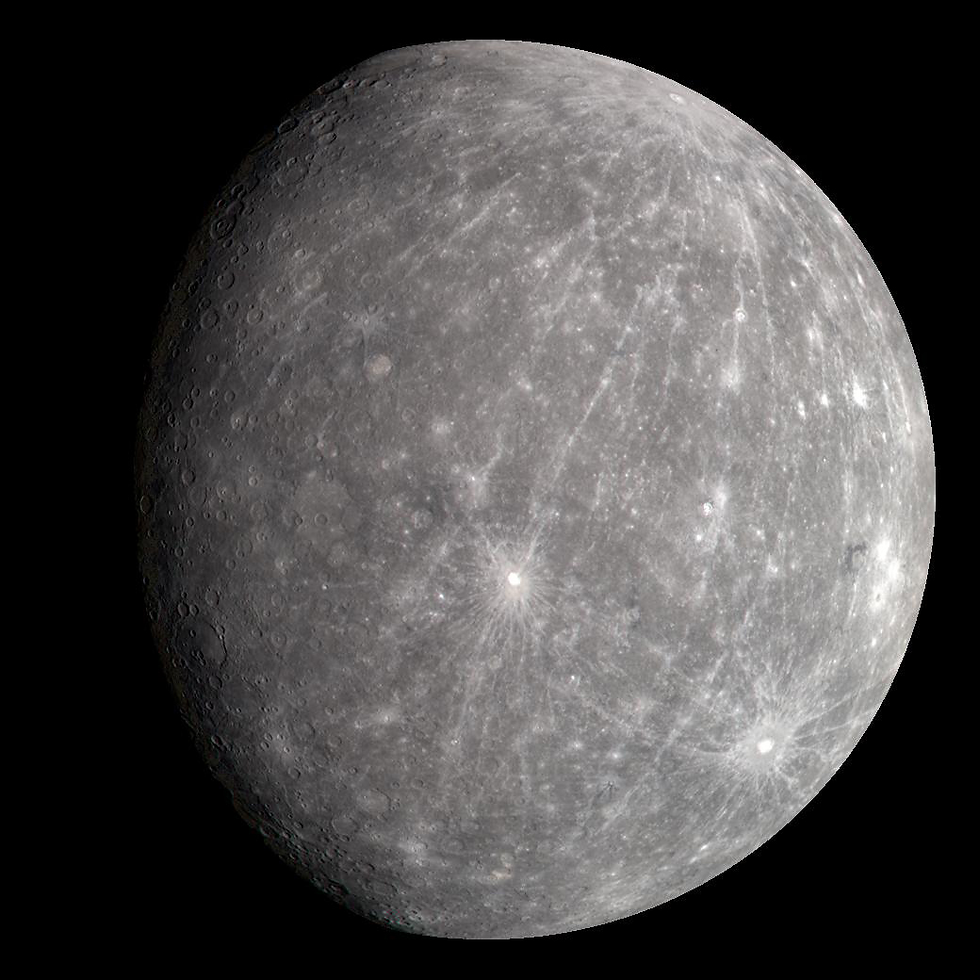
Mercury is closer to the Sun than Venus, so it does receive more solar energy. But Mercury has almost no real atmosphere to trap heat. This means that when sunlight hits its surface, the planet becomes extremely hot during the day, but once the Sun sets, that heat escapes very quickly into space. As a result, Mercury experiences huge temperature changes between day and night.

However, Venus is different. Even though it is farther from the Sun, it has an extremely thick atmosphere made mostly of carbon dioxide. Carbon dioxide is a greenhouse gas, which means it traps heat. Essentially, sunlight passes through Venus’s atmosphere and warms the planet’s surface, but the heat cannot easily escape back into space. This creates a very powerful greenhouse effect, much stronger than the one on Earth, which leads to extremely hot temperatures.

Because of this trapped heat, Venus has surface temperatures of around 465°C, which is hot enough to melt lead. What makes this even more remarkable is that Venus stays extremely hot across nearly the entire planet, both day and night. Its thick atmosphere spreads the heat around so effectively that temperatures do not change very much.
Mercury, by comparison, can reach very high temperatures on the side facing the Sun, but because it cannot hold onto that heat, its overall average temperature is lower than Venus’s. In other words, being closer to the Sun is not the only thing that determines how hot a planet is. A planet’s atmosphere can make an enormous difference.
Venus is often described as an example of what can happen when a greenhouse effect becomes extreme. Studying it helps scientists understand planetary climates more broadly, including why planets with somewhat similar sizes can have very different environments. Earth and Venus are sometimes called “sister planets” because they are similar in size, but Venus’s atmosphere has made its surface completely hostile to life as we know it.
In conclusion, Venus is the hottest planet in the solar system not because it is the closest to the Sun, but because its dense carbon dioxide atmosphere traps heat so efficiently. This shows that when it comes to planetary temperatures, atmosphere can matter just as much as distance, and sometimes even more.


Comments