Unveiling the Mysteries of 4 Vesta: A Journey to the Heart of the Asteroid Belt
- Cyrine Badji

- Mar 15, 2024
- 2 min read
Nestled between the orbits of Mars and Jupiter lies 4 Vesta, a fascinating asteroid that offers a glimpse into the early days of our solar system. Discovered in 1807 by Heinrich Wilhelm Olbers, 4 Vesta is the second-largest asteroid in our solar system, with a diameter of about 525 kilometers (326 miles).

(Britannica)
What sets 4 Vesta apart is its unique composition and geological features. Unlike smaller asteroids, Vesta is large enough to have undergone a process called differentiation, where heavier materials sink to its core while lighter materials rise to the surface. This gives Vesta a layered structure similar to terrestrial planets like Earth.

(National Defense PAC)
The surface of 4 Vesta is marked by various geological formations, including impact craters, basins, and ridges. One of its most prominent features is the Rheasilvia crater, a massive impact basin approximately 500 kilometers (310 miles) in diameter. This crater is thought to have formed billions of years ago during a collision with another celestial body.
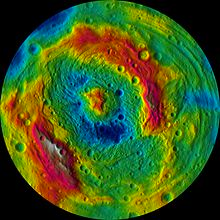
(Wikipedia Contributors)
In 2011, NASA's Dawn spacecraft embarked on a mission to explore Vesta up close, becoming the first spacecraft to orbit an object in the asteroid belt. Over the course of its mission, Dawn captured high-resolution images of Vesta's surface and collected valuable data about its composition and geology. Scientists discovered evidence of past volcanic activity and the presence of hydrated minerals, suggesting that Vesta may have experienced water-related processes in the past.

(Northrop Grumman Newsroom)
Studying 4 Vesta provides researchers with insights into the early stages of our solar system's formation. By analyzing its composition and comparing it with other objects, scientists can better understand the processes that shaped our cosmic neighborhood billions of years ago.
In conclusion, 4 Vesta offers a fascinating window into the history of the asteroid belt and the formation of our solar system. Its layered structure and diverse geological features provide valuable clues about the early stages of planetary formation. As we continue to study 4 Vesta and other celestial bodies, we deepen our understanding of the universe and our place within it.



Comments